Want to post a buying lead? If you are not a member yet, please select the specific/related part number first and then fill the quantity and your contact details in the "Request for Quotation Form" on the left, and then click "Send RFQ".Your buying lead can then be posted, and the reliable suppliers will quote via our online message system or other channels soon.
LITELINK III is a single-package silicon phone line interface/DAA used in voice and data communication applications to make connections between host equipment and telephone networks.
LITELINK provides a high-voltage isolation barrier, AC and DC phone line termination, switchhook, 2-wire to 4-wire hybrid, ring detection, and on-hook signal detection. LITELINK can be used in both differential and single-ended signal applications.
LITELINK uses on-chip optical components and a few inexpensive external components to form a complete voice or high-speed data phone line interface.
LITELINK eliminates the need for the large isolation transformers or capacitors used in other interface configurations. It incorporates the required high-voltage isolation barrier in the surface-mount SOIC package.
The CPC5620 (half-wave ring detect) and CPC5621 (full-wave ring detect) PLIs build upon Clare's
LITELINK II line, with improved insertion loss control, improved noise performance, and lower minimum current draw from the phone line.
CPC5620 Maximum Ratings
Parameter
Minimum
Maximum
Unit
Isolation Voltage
1500
-
VRMS
Continuous Tip to Ring Current (RZDC = 5.2)
150
mA
Total Package Power Dissipation
1
W
Operating temperature
0
+85
°C
Storage temperature
-40
+125
°C
Soldering temperature
-
+220
°C
CPC5620 Features
• Superior voice solution with high power option, low noise, no automatic gain control circuit, and excellent part-to-part gain accuracy • Data access arrangement (DAA) solution for modems at speeds up to V.92 • 3.3 or 5 V power supply operation • Caller ID signal reception function • Easy interface with modem ICs and voice CODECs • Worldwide dial-up telephone network compatibility • Supplied application circuit complies with the requirements of TIA/EIA/IS-968 (FCC part 68), UL1950, UL60950, EN60950, IEC60950, EN55022B, CISPR22B, EN55024, and TBR-21 • Complies with UL1577 • Line-side circuit powered from telephone line • Compared to other silicon DAA solutions, LITELINK: - Uses fewer passive components - Takes up less printed-circuit board space - Uses less telephone line power - Offers simplified operation - Is a single-chip solution
CPC5620 Typical Application
• Computer telephony and gateways, such as VoIP • PBXs • Satellite and cable set-top boxes • V.92 (and other standard) modems • Fax machines • Voicemail systems • Embedded modems for POS terminals, automated banking, remote metering, vending machines, security, and surveillance
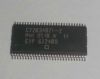
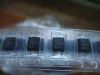
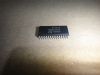
The CPC5620ATR is designed as LITELINK III phone line interface IC (DAA). LITELINK III is a single-package silicon phone line interface / DAA used in voice and data communication applications to make connections between host equipment and telephone networks. LITELINK provides a high-voltage isolation barrier, AC and DC phone line termination, switchhook, 2-wire to 4-wire hybrid, ring detection, and on-hook signal detection. LITELINK can be used in both differential and single-ended signal applications.
It has ten features. (1) Superior voice solution with high power option, low noise, no automatic gain control circuit, and excellent part-to-part gain accuracy. (2) Data access arrangement (DAA) solution for modems at speeds up to V.92. (3) 3.3 or 5V power supply operation. (4) Caller ID signal reception function. (5) Easy interface with modem ICs and voice CODECs. (6) Worldwide dial-up telephone network compatibility. (7) Supplied application circuit complies with the requirements of TIA / EIA / IS-968 (FCC part 68), UL1950, UL60950, EN60950, IEC60950, EN55022B, CISPR22B, EN55024, and TBR-21. (8) Complies with UL1577. (9) Line-side circuit powered from telephone line. (10) Compared to other silicon DAA solutions, LITELINK uses fewer passive components, takes up less printed-circuit board space, uses less telephone line power, offers simplified operation and is a single-chip solution. That are all the main features.
Some absolute maximum ratings have been concluded into several points as follow. (1) Its isolation voltage would be min 1500Vrms. (2) Its continuous tip to ring current would be max 150mA. (3) Its total package power dissipation would be max 1W. (4) Its operating temperature range would be from 0°C to +85°C. (5) Its storage temperature range would be from -40°C to +125°C. (6) Its soldering temperature would be max +220°C. And so on. If you have any question or suggestion or want to know more information please contact us for details. Thank you!