Want to post a buying lead? If you are not a member yet, please select the specific/related part number first and then fill the quantity and your contact details in the "Request for Quotation Form" on the left, and then click "Send RFQ".Your buying lead can then be posted, and the reliable suppliers will quote via our online message system or other channels soon.
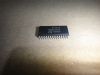
Control of the CS1112 can be done using the Serial Peripheral Interface (SPI) port using the Data Input information in Table 1, or the outputs can be controlled via the parallel inputs (IN0, IN1, IN2, IN3). IN0 controls OUT0, IN1 controls OUT1, IN2 controls OUT2, and IN3 controls OUT3. Turning the output drivers on is an OR function with the SPI input and the parallel inputs.
Note: To prevent damage to the IC or the output load, VDD must be above the Power on Reset threshold (3.5 V) before IN0, IN1, IN2, or IN3 are asserted high (< 70% VDD).
CS1112 Maximum Ratings
Rating
Value
Unit
DC Supply (VPWR)
0.3 to 30
V
Output DC Voltage (Out 0, 1, 2, 3)
46
V
VDD Supply Voltage
0.3 to +7.0
V
Peak Transient (1.0 ms rise time, 300 ms period, 32 V Load Dump @ 14 V VPWR)
46
V
Digital Input Voltage
0.3 to VDD + 0.3
V
Single Pulse Avalanche Energy (I = 450 mA)(Out 0, 1, 2, 3)
50
mJ
Operating Junction Temperature, TJ
40 to 150
°C
ESD Capability (Human Body Model)
1.5
kV
Lead Temperature Soldering: Reflow: (SMD styles only) (Note 1.)
230 peak
°C
CS1112 Features
• 4.0 MHz Serial Input Bus • Parallel Input Control • 1.0 W DMOS Drivers (typ) • Power On Reset • Internal Flyback Clamps • Status Output • Fault Protection 46 V Peak Transient Power Limiting Undervoltage Overvoltage • Fault Reporting Open Load Short Circuit • 8 Internally Fused Leads