Want to post a buying lead? If you are not a member yet, please select the specific/related part number first and then fill the quantity and your contact details in the "Request for Quotation Form" on the left, and then click "Send RFQ".Your buying lead can then be posted, and the reliable suppliers will quote via our online message system or other channels soon.
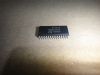
The L4972Aisa stepdownmonolithicpowerswitching regulatordelivering2Aat avoltagevariable from 5.1 to 40V.
Realized with BCD mixed technology, the device uses a DMOS output transistor to obtain very high efficiencyand very fast switching times. Featuresofthe L4972A include reset and power fail for microprocessors, feed forward line regulation, soft start ,limiting current and thermal protection. The device is mountedin a Powerdip16 + 2 + 2and SO20large plastic packages and requires few external components. Efficient operation at switching frequencies up to 200KHz allows reduction in the size and cost of external filter component.
L4972A Maximum Ratings
Symbol
Parameter
Value
Unit
V11
Input voltage
55
V
V11
Input to output voltage difference
50
V
V20
Negative output DC voltage
-1 -5
V
I20
Negative output peak voltage at t = 0.1ms; f = 100KHz
The L4972Aisa stepdownmonolithicpowerswitching regulatordelivering2Aat avoltagevariable from 5.1 to 40V.
Realized with BCD mixed technology, the device uses a DMOS output transistor to obtain very high efficiencyand very fast switching times. Featuresofthe L4972A include reset and power fail for microprocessors, feed forward line regulation, soft start ,limiting current and thermal protection. The device is mountedin a Powerdip16 + 2 + 2and SO20large plastic packages and requires few external components. Efficient operation at switching frequencies up to 200KHz allows reduction in the size and cost of external filter component.
L4972AD Maximum Ratings
Symbol
Parameter
Value
Unit
V11
Input voltage
55
V
V11
Input to output voltage difference
50
V
V20
Negative output DC voltage
-1 -5
V
I20
Negative output peak voltage at t = 0.1ms; f = 100KHz


(NARROW%20PDIP%20MDIP)%20SERIES.JPG)