MPC9140, MPC918, MPC9229 Selling Leads, Datasheet
MFG:MOT Package Cooled:SOP48W D/C:06+

MPC9140, MPC918, MPC9229 Datasheet download

Part Number: MPC9140
MFG: MOT
Package Cooled: SOP48W
D/C: 06+


MFG:MOT Package Cooled:SOP48W D/C:06+
MPC9140, MPC918, MPC9229 Datasheet download
MFG: MOT
Package Cooled: SOP48W
D/C: 06+

Want to post a buying lead? If you are not a member yet, please select the specific/related part number first and then fill the quantity and your contact details in the "Request for Quotation Form" on the left, and then click "Send RFQ".Your buying lead can then be posted, and the reliable suppliers will quote via our online message system or other channels soon.
TOP
PDF/DataSheet Download
Datasheet: MPC100
File Size: 359814 KB
Manufacturer: BURR-BROWN [Burr-Brown Corporation]
Download : Click here to Download
PDF/DataSheet Download
Datasheet: MPC100
File Size: 359814 KB
Manufacturer: BURR-BROWN [Burr-Brown Corporation]
Download : Click here to Download
PDF/DataSheet Download
Datasheet: MPC9229
File Size: 171657 KB
Manufacturer: Motorola
Download : Click here to Download
The internal crystal oscillator uses the external quartz crystal as the basis of its frequency reference. The frequency of the internal crystal oscillator is divided by 16 and then multiplied by the PLL. The VCO within the PLL operates over a range of 800 to 1600 MHz. Its output is scaled by a divider that is configured by either the serial or parallel interfaces. The crystal oscillator frequency fXTAL, the PLL feedback-divider M and the PLL post-divider N determine the output frequency.
The feedback path of the PLL is internal. The PLL adjusts the VCO output frequency to be 4VM times the reference frequency by adjusting he VCO control voltage. Note that for some values of M (either too high or too low) the PLL will not achieve phase lock. The PLL will be stable if the VCO frequency is within the specified VCO frequency range (800 to 1600 MHz). The M-value must be programmed by the serial or parallel interface.
The PLL post-divider N is configured through either the serial or the parallel interfaces, and can provide one of four division ratios (1, 2, 4, or 8). This divider extends performance of the part while providing a 50% duty cycle. The output driver is driven differentially from the output divider, and is capable of driving a pair of transmission lines terminated 50W to VCC 2.0V. The positive supply voltage for the internal PLL is separated from the power supply for the core logic and output drivers to minimize noise induced jitter.
The configuration logic has two sections: serial and parallel. The parallel interface uses the values at the M[8:0] and N[1:0] inputs to configure the internal counters. It is recommended on system reset to hold the P_LOAD input LOW until power becomes valid. On the LOWtoHIGH transition of P_LOAD, the parallel inputs are captured. The parallel interface has priority over the serial interface. Internal pullup resistors are provided on the M[8:0] and N[1:0] inputs prevent the LVCMOS compatible control inputs from floating.
The serial interface centers on a fourteen bit shift register. The shift register shifts once per rising edge of the S_CLOCK input.
The serial input S_DATA must meet setup and hold timing as specified in the AC Characteristics section of this document. The configuration latches will capture the value of the shift register on the HIGHtoLOW edge of the S_LOAD input. See the programming section for more information. The TEST output reflects various internal node values, and is controlled by the T[2:0] bits in the serial data stream. In order to minimize the PLL jitter, it is recommended to avoid active signal on the TEST output.
| Symbol | Parameter | Min | Max | Unit | Condition |
| VCC | Supply Voltage | -0.3 | 3.9 | V | |
| VI | DC Input Voltage | -0.3 | VCC + 0.3 | V | |
| VOUT | DC Output Voltage | -0.3 | VCC + 0.3 | V | |
| IIN | DC Input Current | ±20 | mA | ||
| IOUT | DC Output Current | ±50 | mA | ||
| TS | Storage Temperature | -65 | 125 |
a. Absolute maximum continuous ratings are those maximum values beyond which damage to the device may occur. Exposure to these conditions or conditions beyond those indicated may adversely affect device reliability. Functional operation at absolute-maximum-rated conditions is not implied.

Price: 4-6 USD
MT58L64L18CT-10 TQFP100
Price: 5-6.5 USD
DL-7140-211M laser tube
Price: 4-5 USD
74LVC74APG - IC FLIP FLOP D-Type POS-EDG DUAL 14TSSOP
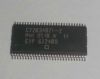
Price: 6.5-8 USD
CYPRESS - Clock Synthesizer with Differential CPU Outputs
Price: 0.284-0.286 USD
PI5V330QEX Pericom Multiplexer Switch ICs
Price: 1-2 USD
IGBT power module, Single switch, 1200 V, Collector-emitter voltage, 430A
Price: 1-2 USD
a-Si TFT-LCD, NEC, 228.096Hmm, 560V
Price: 0.124-0.2 USD
PC354N1T - Mini-flat Package, AC Input Type Photocoupler - Sharp Electrionic Components
Price: 0.177-0.178 USD
RL1210JR51-XX-BL - Thick Film Chip Resistor Low Ohmic - TAITRON Components Incorporated
Price: 0.053-0.055 USD
STPS140A - POWER SCHOTTKY RECTIFIER - STMicroelectronics
Price: 1.45-1.5 USD
STA013 - MPEG 2.5 LAYER III AUDIO DECODER - STMicroelectronics
Price: 0.073-0.075 USD
SMBJ5347B - 5 Watt Surface Mount Silicon Zener Diodes - Micro Commercial Components


