Want to post a buying lead? If you are not a member yet, please select the specific/related part number first and then fill the quantity and your contact details in the "Request for Quotation Form" on the left, and then click "Send RFQ".Your buying lead can then be posted, and the reliable suppliers will quote via our online message system or other channels soon.
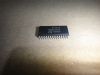
The SONIC-T (Systems-Oriented Network Interface Controller with Twisted Pair) is a second-generation Ethernet Controller designed to meet the demands of today's high-speed 32- and 16-bit systems. Its system interface operates with a high speed DMA that typically consumes less than 5% of the bus bandwidth. Selectable bus modes provide both big and little endian byte ordering and a clean interface to standard microprocessors. The linked-list buffer management system of SONIC-T offers maximum flexibility in a variety of environments from PC-oriented adapters to high-speed motherboard designs. The SONIC-T can be configured for full duplex operation. Furthermore, the SONIC-T integrates a fully-compatible IEEE 802.3 Encoder/Decoder (ENDEC) and a Twisted Pair Interface which provide a one-chip solution for Ethernet when using 10BASE-T. When using 10BASE2 or 10BASE5, the SONIC-T may be paired with the DP8392 Coaxial Transceiver Interface to achieve a simple 2-chip solution.
For increased performance, the SONIC-T implements a unique buffer management scheme to efficiently process receive and transmit packets in system memory. No intermediate packet copy is necessary. The receive buffer management uses three areas in memory for (1) allocating additional resources, (2) indicating status information, and (3) buffering packet data. During reception, the SONIC-T stores packets in the buffer area, then indicates receive status and control information in the descriptor area. The system allocates more memory resources to the SONIC-T by adding descriptors to the memory resource area. The transmit buffer management uses two areas in memory: 1. indicating status and control information; 2. fetching packet data. The system can create a transmit queue allowing multiple packets to be transmitted from a single transmit command. The packet data can reside on any arbitrary byte boundary and can exist in several non-contiguous locations.
DP83936AVUL-20 Maximum Ratings
Supply Voltage (VCC) b.......................................0.5V to 7.0V DC Input Voltage (VIN) b..........................0.5V to VCC a 0.5V DC Output Voltage (VOUT) b....................0.5V to VCC a 0.5V Storage Temperature Range (TSTG) b65°C to ...........150°C Power Dissipation (PD) ............................................500 mW Lead Temp. (TL) (Soldering, 10 sec.) .........................260°C ESD Rating (RZAP e 1.5k, CZAP e 120 pF).................................... 1.5 kV
DP83936AVUL-20 Features
· 32-bit non-multiplexed address and data bus · Configurable for Full Duplex operation · Auto AUI/TPI selection · High-speed interruptible DMA · Linked-list buffer management maximizes flexibility · Two independent 32-byte transmit and receive FIFOs · Bus compatibility for all standard microprocessors · Integrated IEEE 802.3 ENDEC · Integrated Twisted Pair Interface · Complete address filtering for up to 16 physical and/or multicast addresses · 32-bit general-purpose timer · Loopback diagnostics · Fabricated in low-power CMOS · 160 PQFP package · Full network management facilities support the 802.3 layer management standard · Integrated support for bridge and repeater applications