EP1810, EP1810-20, EP1810-25T Selling Leads, Datasheet
MFG:ALTERA Package Cooled:JLCC D/C:09+

EP1810, EP1810-20, EP1810-25T Datasheet download

Part Number: EP1810
MFG: ALTERA
Package Cooled: JLCC
D/C: 09+


MFG:ALTERA Package Cooled:JLCC D/C:09+
EP1810, EP1810-20, EP1810-25T Datasheet download
MFG: ALTERA
Package Cooled: JLCC
D/C: 09+

Want to post a buying lead? If you are not a member yet, please select the specific/related part number first and then fill the quantity and your contact details in the "Request for Quotation Form" on the left, and then click "Send RFQ".Your buying lead can then be posted, and the reliable suppliers will quote via our online message system or other channels soon.
TOP
PDF/DataSheet Download
Datasheet: EP1810
File Size: 1720729 KB
Manufacturer: ALTERA [Altera Corporation]
Download : Click here to Download
PDF/DataSheet Download
Datasheet: EP1810-20
File Size: 1424825 KB
Manufacturer: ALTERA [Altera Corporation]
Download : Click here to Download
PDF/DataSheet Download
Datasheet: EP1001-7R
File Size: 74090 KB
Manufacturer: POWER-ONE [Power-One]
Download : Click here to Download
The Altera ClassicTM device family offers a solution to high-speed, lowpower logic integration. Fabricated on advanced CMOS technology, Classic devices also have a Turbo-only version, which is described in this data sheet.
Classic devices support 100% TTL emulation and can easily integrate multiple PAL- and GAL-type devices with densities ranging from 300 to 900 usable gates. The Classic family provides pin-to-pin logic delays as low as 10 ns and counter frequencies as high as 100 MHz. Classic devices are available in a wide range of packages, including ceramic dual in-line package (CerDIP), plastic dual in-line package (PDIP), plastic J-lead chip carrier (PLCC), ceramic J-lead chip carrier (JLCC), pin-grid array (PGA), and small-outline integrated circuit (SOIC) packages.
EPROM-based Classic devices can reduce active power consumption without sacrificing performance. This reduced power consumption makes the Classic family well suited for a wide range of low-power applications.
Classic devices are 100% generically tested devices in windowed packages and can be erased with ultra-violet (UV) light, allowing design changes to be implemented quickly.
Classic devices use sum-of-products logic and a programmable register. The sum-of-products logic provides a programmable-AND /fixed-ORstructure that can implement logic with up to eight product terms. The programmable register can be individually programmed for D, T, SR, or JK flipflop operation or can be bypassed for combinatorial operation. In addition, macrocell registers can be individually clocked either by a global clock or by any input or feedback path to the AND array. Altera's proprietary programmable I/O architecture allows the designer to program output and feedback paths for combinatorial or registered operation in both active-high and active-low modes. These features make it possible to implement a variety of logic functions simultaneously.
Classic devices are supported by Altera's MAX+PLUS II development system, a single, integrated package that offers schematic, text-including VHDL, Verilog HDL, and the Altera Hardware Description Language (AHDL)-and waveform design entry, compilation and logic synthesis, simulation and timing analysis, and device programming. The MAX+PLUS II software provides EDIF 2 0 0 and 3 0 0, LPM, VHDL, Verilog HDL, and other interfaces for additional design entry and simulation support from other industry-standard PC- and workstationbased EDA tools. The MAX+PLUS II software runs on Windows-based PCs, as well as Sun SPARCstation, HP 9000 Series 700/800, and IBM RISC System/6000 workstations. These devices also contain on-board logic test circuitry to allow verification of function and AC specifications during standard production flow.
| Symbol | Parameter | Conditions | EP610 | EP610I | Unit | ||
| Min | Max | Min | Max | ||||
| VCC | Supply voltage | With respect to ground (3) | 2.0 | 7.0 | 2.0 | 7.0 | V |
| VI | DC input voltage | 2.0 | 7.0 | 0.5 | VCC + 0.5 | V | |
| IMAX | DC VCC or ground current | -175 | 175 | mA | |||
| IOUT | DC output current, per pin | -25 | 25 | mA | |||
| TSTG | Storage temperature | No bias | 65 | 150 | 65 | 150 | °C |
| TAMB | Ambient temperature | Under bias | 65 | 135 | 65 | 135 | °C |
| TJ | Junction temperature | Ceramic packages, under bias |
150 | 150 | °C | ||
| Plastic packages, under bias | 135 | 135 | °C | ||||
` Complete device family with logic densities of 300 to 900 usable gates (see Table 1)
`Device erasure and reprogramming with non-volatile EPROM configuration elements
`Fast pin-to-pin logic delays as low as 10 ns and counter frequenciesas high as 100 MHz
` 24 to 68 pins available in dual in-line package (DIP), plastic J-lead chip carrier (PLCC), pin-grid array (PGA), and small outline integrated circuit (SOIC) packages
`Programmable security bit for protection of proprietary designs
` 100% generically tested to provide 100% programming yield
`Programmable registers providing D, T, JK, and SR flipflops with individual clear and clock controls
`Software design support featuring the Altera ®MAX+PLUS® II development system on Windows-based PCs, as well as Sun SPARCstation, HP 9000 Series 700/800, IBM RISC System/6000 workstations, and third-party development systems
`Programming support with Altera's Master Programming Unit (MPU); programming hardware from Data I/O, BP Microsystems, and other third-party programming vendors
` Additional design entry and simulation support provided by EDIF, library of parameterized modules (LPM), Verilog HDL, VHDL, and other interfaces to popular EDA tools from manufacturers such as Cadence, Exemplar Logic, Mentor Graphics, OrCAD, Synopsys, Synplicity, and VeriBest

Price: 4-6 USD
MT58L64L18CT-10 TQFP100
Price: 5-6.5 USD
DL-7140-211M laser tube

Price: 4-5 USD
74LVC74APG - IC FLIP FLOP D-Type POS-EDG DUAL 14TSSOP
Price: 6.5-8 USD
CYPRESS - Clock Synthesizer with Differential CPU Outputs
Price: 0.284-0.286 USD
PI5V330QEX Pericom Multiplexer Switch ICs
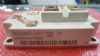
Price: 1-2 USD
IGBT power module, Single switch, 1200 V, Collector-emitter voltage, 430A
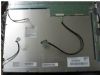
Price: 1-2 USD
a-Si TFT-LCD, NEC, 228.096Hmm, 560V
Price: 0.124-0.2 USD
PC354N1T - Mini-flat Package, AC Input Type Photocoupler - Sharp Electrionic Components
Price: 0.177-0.178 USD
RL1210JR51-XX-BL - Thick Film Chip Resistor Low Ohmic - TAITRON Components Incorporated

Price: 0.053-0.055 USD
STPS140A - POWER SCHOTTKY RECTIFIER - STMicroelectronics
Price: 1.45-1.5 USD
STA013 - MPEG 2.5 LAYER III AUDIO DECODER - STMicroelectronics
Price: 0.073-0.075 USD
SMBJ5347B - 5 Watt Surface Mount Silicon Zener Diodes - Micro Commercial Components


