SPH4692, SPHA, SPHA918LR Selling Leads, Datasheet
MFG:SIEMENS Package Cooled:DIP-18 D/C:09+

SPH4692, SPHA, SPHA918LR Datasheet download

Part Number: SPH4692
MFG: SIEMENS
Package Cooled: DIP-18
D/C: 09+


MFG:SIEMENS Package Cooled:DIP-18 D/C:09+
SPH4692, SPHA, SPHA918LR Datasheet download
MFG: SIEMENS
Package Cooled: DIP-18
D/C: 09+

Want to post a buying lead? If you are not a member yet, please select the specific/related part number first and then fill the quantity and your contact details in the "Request for Quotation Form" on the left, and then click "Send RFQ".Your buying lead can then be posted, and the reliable suppliers will quote via our online message system or other channels soon.
TOP
PDF/DataSheet Download
Datasheet: SPH4692
File Size: 552324 KB
Manufacturer: SIEMENS [Siemens Semiconductor Group]
Download : Click here to Download
PDF/DataSheet Download
Datasheet: SPH4690
File Size: 702350 KB
Manufacturer: SIEMENS [Siemens Semiconductor Group]
Download : Click here to Download
PDF/DataSheet Download
Datasheet: SPH4690
File Size: 702350 KB
Manufacturer: SIEMENS [Siemens Semiconductor Group]
Download : Click here to Download
The application circuit shows a flyback converter for video recorders with an output power rating of 25 W. The circuit is designed as a wide-range power supply for AC-line voltage of 180 to 264 V. The AC-input voltage is rectified by the bridge rectifier GR1 and smoothed by C1. The NTC limits the rush-in current.
In the period before the switch-on threshold is reached the IC is supplied via resistor R1; during the start-up phase it uses the energy stored in C2, under steady state conditions the IC receives its supply voltage from transformer winding n1 via diode D1. The switching transistor T1 is a BUZ 92. The parallel connected capacitor C3 and the inductance of primary winding n2 determine the system resonance frequency. The R2-C4-D2 circuitry limits overshoot peaks, and R13 protects the gate of T1 against static charges.
During the conductive phase of the power transistor T1 the current rise in the primary winding depends on the winding inductance and the mains voltage. The network consisting of R4-C5 is used to create a model of the sawtooth shaped rise of the collector current. The resulting control voltage is fed into pin 2 of the IC. The RC-time constant given by R4-C5 must be designed that way that driving the transistor core into saturation is avoided.
The ratio of the voltage divider R10/R11 is fixing a voltage level threshold. Below this threshold the switching power supply shall stop operation because of the low mains voltage. The control voltage present at pin 3 also determines the correction current for the fold-back point. This current added to the current flowing through R4 and represents an additional charge to C5 in order to reduce the turn-on phase of T1. This is done to stabilize the fold-back point even under higher main voltages. Regulation of the switched-mode power supply is via pin 1.The control voltage of winding n1 during the off period of T1 is rectified by D3, smoothed by C6 and stepped down at an adjustable ratio by R5, R6 and R7. The R8-C7 network suppresses parasitic overshoots (transformer oscillation). The peak voltage at pin 2, and thus the primary peak current, is adjusted by the IC so that the voltage applied across the control winding, and hence the output voltages, are at the desired level.
When the transformer has supplied its energy to the load, the control voltage passes through zero. The IC detects the zero crossing via series resistors R9 connected to pin 18. But zero crossings are also produced by transformer oscillation after T1 has turned off if outputs is short-circuited.
Therefore the IC ignores zero crossings occurring within a specified period of time after T1 turn-off. The capacitor C8 connected to pin 17 causes the power supply to be started with shorter pulses to keep the operating frequency outside the audible range during start-up.
On the secondary side, three output voltages are produced across winding n3 to n5 rectified by D4 to D6 and smoothed by C9 to C11. Resistor R12 is used as a bleeder resistor. Fusable resistors R15 and R16 protect the rectifiers against short-circuits in the output circuits, which are designed to supply only small loads.
| Parameter | Symbol | Limit Values | Unit | Remarks | ||
| min. | typ. | max. | ||||
| Voltag pin 1 pin 2 pin 3 pin 15 pin 16 pin 17 |
V1 V2 V3 V15 V16 V17 |
0.3 0.3 0.3 0.3 0.3 0.3 |
3 V16 20 |
V V V V V V |
Supply voltage | |
| Current pin 1 pin 2 pin 3 pin 4 pin 15 pin 16 pin 17 pin 18 |
I 1 I 2 I 3 I 4 I 15 I 16 I 17 I 18 |
1.5 0.5 5 |
3 3 3 1.5 0.5 3 3 |
mA mA mA A A A mA mA |
tp 50 ms; v 0.1 tp 50 ms; v 0.1 tp 50 ms; v 0.1 | |
| Junction temperature | Tj | 125 | °C | |||
| Storage temperature | Tstg | 40 | 125 | °C |
| Drain current | ID | 2A |
|
TA = 25 °C | ||
| Pulsed drain current | ID pulse | 4.5+20 | A | TA = 25 °C | ||
| Gate source voltage | VGS-20 | 1.7 | V | TA = 25 °C | ||
| Power dissipation | PD | 220 | W | ID = 3.3 A; VDD = 50 V R GS = 25 W; L = 30 mH | ||
| Single pulse Avalanche Energy |
EAS | mJ | ||||
| Repetitive avalanche Energy | EAR | 6 | mJ | limited by Tj | ||
| Avalanche current repet. or non-repet. |
IAR | 3.3 | A | limited by Tj max | ||
| Junction temperature | Tj | 150 | °C |
| ||
| Storage temperature | Tstg-40 | 125 | °C | |||
| Thermal resistance system-air |
R th SA | 70 | K/W | Cooling surface 100 mm2 |
Fold-back characteristics provides overload protection for external components
Burst operation under secondary short-circuit condition implemented
Protection against open or a short of the control loop
Switch-off if line voltage is too low (undervoltage switch-off)
Line voltage depending compensation of fold-back point
Soft-start for quiet start-up without noise generated by the transformer
Chip-over temperature protection implemented (thermal shutdown)
On-chip ringing suppression circuit against parasitic oscillations of the transformer
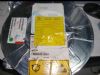
Price: 4-6 USD
MT58L64L18CT-10 TQFP100
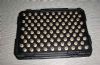
Price: 5-6.5 USD
DL-7140-211M laser tube
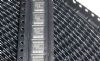
Price: 4-5 USD
74LVC74APG - IC FLIP FLOP D-Type POS-EDG DUAL 14TSSOP
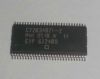
Price: 6.5-8 USD
CYPRESS - Clock Synthesizer with Differential CPU Outputs
Price: 0.284-0.286 USD
PI5V330QEX Pericom Multiplexer Switch ICs
Price: 1-2 USD
IGBT power module, Single switch, 1200 V, Collector-emitter voltage, 430A
Price: 1-2 USD
a-Si TFT-LCD, NEC, 228.096Hmm, 560V
Price: 0.124-0.2 USD
PC354N1T - Mini-flat Package, AC Input Type Photocoupler - Sharp Electrionic Components
Price: 0.177-0.178 USD
RL1210JR51-XX-BL - Thick Film Chip Resistor Low Ohmic - TAITRON Components Incorporated
Price: 0.053-0.055 USD
STPS140A - POWER SCHOTTKY RECTIFIER - STMicroelectronics
Price: 1.45-1.5 USD
STA013 - MPEG 2.5 LAYER III AUDIO DECODER - STMicroelectronics
Price: 0.073-0.075 USD
SMBJ5347B - 5 Watt Surface Mount Silicon Zener Diodes - Micro Commercial Components


