Want to post a buying lead? If you are not a member yet, please select the specific/related part number first and then fill the quantity and your contact details in the "Request for Quotation Form" on the left, and then click "Send RFQ".Your buying lead can then be posted, and the reliable suppliers will quote via our online message system or other channels soon.
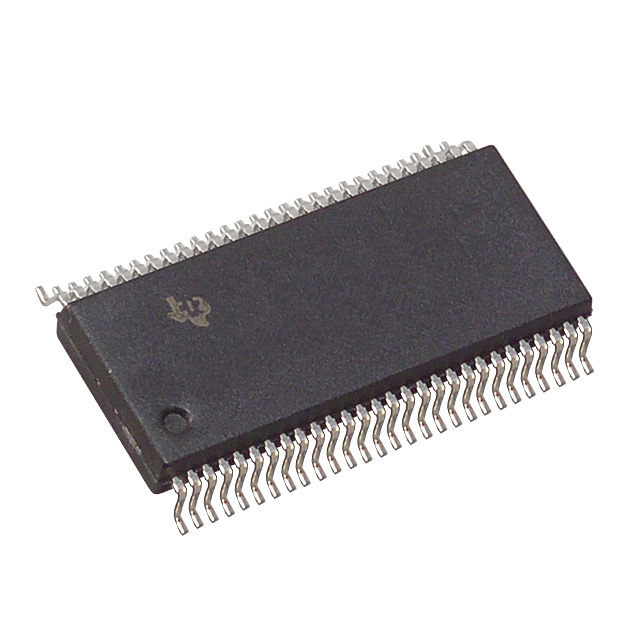
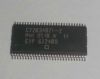
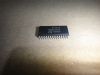
The CDC925 is a clock synthesizer/driver that generates system clocks necessary to support Intel Pentium III systems on CPU, CPU_DIV2, 3V66, PCI, APIC, 48MHz, and REF clock signals. All output frequencies are generated from a 14.318-MHz crystal input. A reference clock input instead of a crystal can be provided at the XIN input. Two phase-locked loops (PLLs) are used, one to generate the host frequencies and the other to generate the 48-MHz clock frequency. On-chip loop filters and internal feedback loops eliminate the need for external components. The host and PCI clock outputs provide low-skew and low-jitter clock signals for reliable clock operation. All outputs have 3-state capability, which can be selected via control inputs SEL0, SEL1, and SEL133/100. The outputs are either 3.3-V or 2.5-V single-ended CMOS buffers. With a logic high-level on the PWR_DWN terminal, the device operates normally, but when a logical low-level input is applied, the device powers down completely, with the outputs in a low-level output state. When a high-level is applied to the PCI_STOP or CPU_STOP, the outputs operate normally. With a low-level applied to the PCI_STOP or CPU_STOP terminals, the PCI or CPU and 3V66 outputs, respectively, are held in a low-level state. The CPU bus can operate at 100 MHz or 133 MHz. Output frequency selection is done with corresponding setting for SEL133/100 control input. The PCI bus frequency is fixed to 33MHz.
† Stresses beyond those listed under "absolute maximum ratings" may cause permanent damage to the device. These are stress ratings only, and functional operation of the device at these or any other conditions beyond those indicated under "recommended operating conditions" is not implied. Exposure to absolute-maximum-rated conditions for extended periods may affect device reliability. NOTE 1: The input and output negative-voltage ratings may be exceeded if the input and output clamp-current ratings are observed.