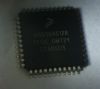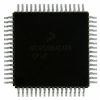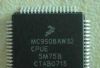
MC9S12B128 Maximum Ratings
MC9S12B128 Features
• HCS12 Core
16-bit HCS12 CPU
i. Upward compatible with M68HC11 instruction set
ii. Interrupt stacking and programmer's model identical to M68HC11
iii. Instruction queue
iv. Enhanced indexed addressing
MEBI (Multiplexed External Bus Interface)
MMC (Module Mapping Control)
INT (Interrupt control)
BKP (Breakpoints)
BDM (Background Debug Mode)
• CRG
Low current Colpitts or
Pierce oscillator,
PLL,
COP watchdog,
Real time interrupt,
Clock monitor
• 8-bit and 4-bit ports with interrupt functionality
Digital filtering
Programmable rising or falling edge trigger
• Memory
128K Flash EEPROM
1K byte EEPROM
4K byte RAM
• Analog-to-Digital Converter
16-channels for 112 Pin Package, 8 channels for 80 Pin package options
10-bit resolution
External conversion trigger capability
• 1M bit per second, CAN 2.0 A, B software compatible module
Five receive and three transmit buffers
Flexible identifier filter programmable as 2 x 32 bit, 4 x 16 bit or 8 x 8
Four separate interrupt channels for Rx, Tx, error and wake-up
Low-pass filter wake-up function
Loop-back for self test operation
• Input Capture/Output Compare Timer (TIM)
16-bit Counter with 7-bit Prescaler
8 programmable input capture or output compare channels
16-bit Pulse Accumulators
Simple PWM Mode
Modulo Reset of Timer Counter
External Event Counting
Gated Time Accumulation
• 8 PWM channels
Programmable period and duty cycle
8-bit 8-channel or 16-bit 4-channel
Separate control for each pulse width and duty cycle
Center-aligned or left-aligned outputs
Programmable clock select logic with a wide range of frequencies
Fast emergency shutdown input
Usable as interrupt inputs
• Serial interfaces
Two asynchronous Serial Communications Interfaces (SCI)
Synchronous Serial Peripheral Interface (SPI)
• Inter-IC Bus (IIC)
Compatible with I2C Bus standard
Multi-master operation
Software programmable for one of 256 different serial clock frequencies
• Internal 2.5V Regulator
Supports an input voltage range from 2.97V to 5.5V
Low power mode capability
Includes low voltage reset (LVR) circuitry
Includes low voltage interrupt (LVI) circuitry
• 112-Pin LQFP or 80 QFP package
I/O lines with 5V input and drive capability
5V A/D converter inputs
Operation at 32 MHz equivalent to 16 MHz Bus Speed; Option 50MHz equivalent to 25MHz
Bus Speed
Development support
Single-wire background debug™ mode (BDM)
On-chip hardware breakpoints
1.3 Modes of Operation
User modes
• Normal and Emulation Operating Modes
Normal Single-Chip Mode
Normal Expanded Wide Mode
Normal Expanded Narrow Mode
Emulation Expanded Wide Mode
Emulation Expanded Narrow Mode
• Special Operating Modes
Special Single-Chip Mode with active Background Debug Mode
Special Test Mode (Motorola use only)
Special Peripheral Mode (Motorola use only)
Low power modes
• Stop Mode
• Pseudo Stop Mode
• Wait Mode
MC9S12B128 Connection Diagram
Map list: ABCDEFGHIJKLMNOPQRSTUVWXYZ 0123456789All