Features: - Function compatible with ATM Forum af-phy-0136.000- Asynchronous/synchronous FIFO using RAM- Up to 256 PHY ports supported- 8/16/32 bit interfaces supported- Direct and polled status- Simple system side FIFO interface- Flow control and polling integratedDescriptionRD_DATA conforms to t...
RD_DATA: Features: - Function compatible with ATM Forum af-phy-0136.000- Asynchronous/synchronous FIFO using RAM- Up to 256 PHY ports supported- 8/16/32 bit interfaces supported- Direct and polled status- Si...
SeekIC Buyer Protection PLUS - newly updated for 2013!
268 Transactions
All payment methods are secure and covered by SeekIC Buyer Protection PLUS.
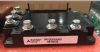
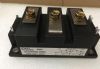
DescriptionThe RDAD-37S4-40 series use a molded one-piece design for parallel mounting on a PCB.De...
RD_DATA conforms to the appropriate standard(s). In general, standards do not define the internal user interface, only the external interfaces and protocols.
Therefore, Avnet Memec has created a simple FIFO interface to this core for easy user connectivity. RD_DATA describes this Avnet Memec created interface. Please consult the appropriate standards document for all external signaling.
TOP_SLAVE
This is the top level of the core. RD_DATA's only purpose is to serve as a container to instantiate the transmit & receive modules. TOP_SLAVE is also where the generics are located that configure the core. These parameters are then passed down to the TX & RX modules.
TOP_EGR_SLAVE & TOP_ING_SLAVE
RD_DATA comprises the transmit and receive portions of the interface. They were developed so that they may be instantiated either separately in different PGAs or together in one FPGA. RD_DATA uses the common sub-modules FIFO_16 & FIFO_8, for simplicity and reliability.
EGR_UTOPIA3_SLAVE
The Egress Slave is responsible for replying to polls from the master in order to receive cells from the master device.
ING_UTOPIA3_SLAVE
The Ingress Slave is responsible for responding to the master in order to send cells to the master device.
FIFO_16 / FIFO_8
The FIFO module contains one FIFO per PHY polled (i.e. this module is instantiated N = number of PHY ports times in each direction. The FIFOs are created by utilizing the available RAM resources in the FPGA. Additionally, two FIFO_16 modules (and hence 2x the RAMs) are instantiated to create a 32-bit wide FIFO for the 32-bit mode, however 2x the cells can be buffered. The FIFO may be operated in synchronous (same clock for read & write) and asynchronous (different clocks for read & write) systems.