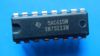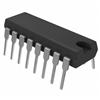
Features: `Meets TIA/EIA-422-B, TIA/EIA-485-A, and CCITT Recommendations V.11 and X.27 `Low Supply-Current Requirements...30 mA Max`Driver Output Capacity...±60 mA`Thermal Shutdown Protection `Driver Common-Mode Output Voltage Range of- 7 V to 12 `Receiver Input Impedance ...12 kMin `Receiver Inpu...
SN75ALS181: Features: `Meets TIA/EIA-422-B, TIA/EIA-485-A, and CCITT Recommendations V.11 and X.27 `Low Supply-Current Requirements...30 mA Max`Driver Output Capacity...±60 mA`Thermal Shutdown Protection `Drive...
SeekIC Buyer Protection PLUS - newly updated for 2013!
268 Transactions
All payment methods are secure and covered by SeekIC Buyer Protection PLUS.

| Supply voltage, VCC (see Note 1) |
7 V |
| Input voltage, D, DE, and RE inputs | 7 V |
| Output voltage range, driver | -9 V to 14 V |
| Input voltage range, receiver | -14 V to 14 V |
| Receiver differential input voltage range (see Note 2) | -14 V to 14 V |
| Package thermal impedance,JA (see Notes 3 and 4) :N package NS package |
80 /W 76 /W |
| Operating virtual junction temperature, TJ | 150 |
| Lead temperature 1,6 mm (1/16 inch) from case for 10 seconds | 260 |
| Storage temperature range, Tstg | -65 to 150 |
The SN75ALS181 is a differential driver and receiver pair designed for bidirectional data communication on multipoint us transmission lines. The design provides for balanced transmission lines and meetsTIA/EIA-422-B and TIA/EIA-485-A, nd CCITT recommendations V.10, V.11, X.26, and X.27.
The SN75ALS181 combines a 3-state differential line driver and a differential-input line receiver that operate from a ngle 5-V power supply. The driver and receiver have active-high and active-low enables, respectively, that can be connected together externally to function as a direction control. The driver differential outputs and the receiver differential inputs e connected to separate pins for greater flexibility and are designed to offer minimum loading to the bus when the driver is disabled or VCC = 0. These ports feature wide positive and negative common-mode voltage changes, making the ice suitable for party-line applications.