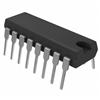
Features: · Four Independent Drivers and Receivers
· Driver Slew Rate Controlled by a Single Resistor
· Fast Driver Transition Times Down to 1.5 ms and Receiver Transition Times of 20 ns Typ
· Internal Thermal-Overload Protection
· RS-423-B Inputs and Outputs Designed to Withstand ±25 V
· ESD Protection Exceeds 2000 V Per MIL-STD-833C Method 3015
· LinBICMOSE Process TechnologyPinout Specifications
Positive supply voltage, VDD (see Note 1) ..................................................14 V
Negative supply voltage, VSS................................................................... 14 V
Bias voltage, Vbias................................................................................... 5.75 V
Receiver input voltage range........................................................ 30 V to 30 V
Driver input voltage range........................................................ 0.5 V to 5.75 V
Driver output voltage range (supplies at 0 V)............................... 30 V to 30 V
Driver output voltage range (supplies at ±12 V).......................... 25 V to 25 V
Continuous power dissipation ................................See Dissipation Rating Table
Operating free-air temperature range, TA.......................................... 0 to 70
Storage temperature range .........................................................65 to 150
Case temperature for 10 seconds............................................................... 260
† Stresses beyond those listed under "absolute maximum ratings" may cause permanent damage to the device. These are stress ratings only, and functional operation of the device at these or any other conditions beyond those indicated under "recommended operating conditions" is not implied. Exposure to absolute-maximum-rated conditions for extended periods may affect device reliability.
NOTE 1: All voltages are with respect to network ground terminal.
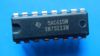
DescriptionThe SN75LBC784 performs as four independent RS-423-B driver/receiver pairs designed to interface data terminal equipment (DTE) with data circuit-terminating equipment (DCE) at rates up to 120 kbps and distances to 1.2 km. The
SN75LBC784 provides an upgrade to the RS-232 serial interface and can be backward compatible with existing serial ports while offering the higher performance required by new faster peripherals, such as v.34 (v.fast) modems. The RS-232 standard, and subsequent revisions, only support data rates up to 20 kbps over about 15 meters of cable. For RS-423-B the data rate is increased to 120 kbps and transmission distance to 1.2 km by reducing the maximum output signal swing, increasing the driver output current, and reducing the receiver input voltage thresholds.
The SN75LBC784 receivers consist of differential comparators with hysteresis and resistive attenuation on the inputs. The resistive attenuation improves the input common mode range and also provides additional protection from ESD and over-voltage stress. The differential and common mode input impedances are sufficiently high to meet RS-423-B. When a differential voltage input of 500 mV is applied across the entire common mode range ( see Figure 5), the receiver characteristics and bias voltage allow the receiver to remain in its intended binary state.
The drivers SN75LBC784 meet all RS-423-B specifications with built-in current limits and thermal-overload protection. Slew-rate controlling circuitry is included in the design, which is adjusted to suit the application by means of an external resistor (Rws). The slew rate controlling circuitry also has a default mode if the Rws pin is shorted to 5 V externally, the transistion time defaults to approximately 1.5 ms. The BIAS input, when shorted to 5 V externally, provides the internal node voltages. The receiver is compatible to RS-232 with the use of external input resistors to meet the RS-232 input resistance specification of 3 k to 7 k.The SN75LBC784 is characterized for operation over the temperature range of 0 to 70.

 SN75LBC784 Data Sheet