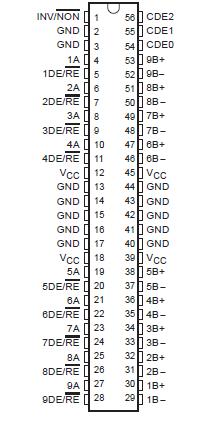
PinoutSpecificationsSupply voltage range, VCC (see Note 1). . . . . . . . . . . . . . . . . . . . . . . 0.5 V to 7 VInput voltage range, VI (A, INV/NON) . . . . . . . . . . . . . . . . . . 0.5 V to VCC + 0.5 V(DE/RE, B+, B, CDE0, CDE1, CDE2) . . . . . . . . . . . . . . . . . . . . . . . 0.5 V to 5...
SN75LVDM977: PinoutSpecificationsSupply voltage range, VCC (see Note 1). . . . . . . . . . . . . . . . . . . . . . . 0.5 V to 7 VInput voltage range, VI (A, INV/NON) . . . . . . . . . . . . . . . . . . 0.5 V to ...
SeekIC Buyer Protection PLUS - newly updated for 2013!
268 Transactions
All payment methods are secure and covered by SeekIC Buyer Protection PLUS.

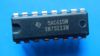
The SN75LVDM976 and SN75LVDM977 have nine transceivers for transmitting or receiving the signals to or from a SCSI data bus. They offer electrical compatibility to both the single-ended signaling of X3.277:1996SCSI3 Parallel Interface (Fast20) and the new low-voltage differential signaling method of proposed standard 1142D SCSI Parallel Interface 2 (SPI2).
The differential SN75LVDM977 drivers are nonsymmetrical. The SCSI bus uses a dc bias on the line to allow terminated fail safe and wired-OR signaling. This bias can be as high as 125 mV and induces a difference in the high-to-low and low-to-high transition times of a symmetrical driver. In order to reduce pulse skew, an LVD SCSI river's output characteristics become nonsymmetrical. In other words, there is more assertion current than negation current to or from the driver. This allows the actual differential signal voltage on the bus to be symmetrical about 0 V. Even though the driver output characteristics are nonsymmetrical, the design of the'SN75LVDM977 drivers maintains balanced signaling. Balanced means that the current that flows in each signal line is nearly equal but opposite in direction and is one of the keys to the low-noise performance of a differential bus.