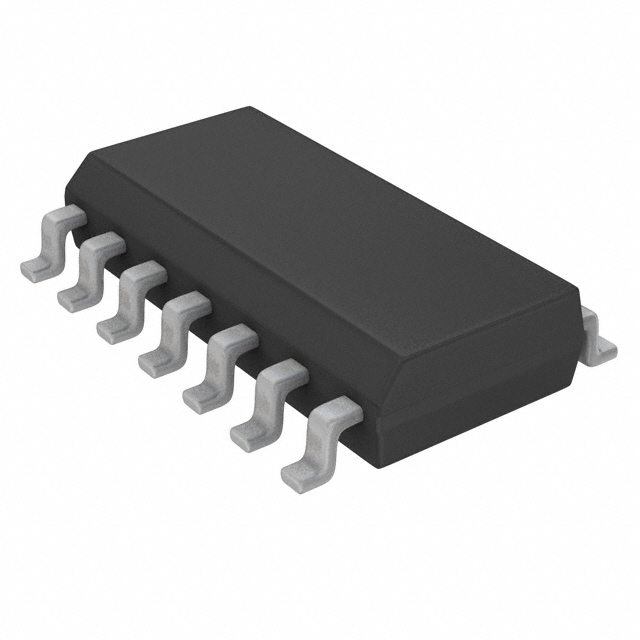
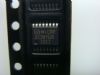
Features: ` Complete UHF receiver on a monolithic chip
` Frequency range 300 to 440 MHz
` Typical range over 200 meters with monopole antenna
` Data rates to 2.5kbps (SWP), 10kbps (FIXED)
` Automatic tuning, no manual adjustment
` No Filters or Inductors required
` Low Operating Supply Current-2.4 mA at 315MHz
` Fully pin compatible with MICRF001
` Very low RF re-radiation at the antenna
` Direct CMOS logic interface to standard decoder and microprocessor ICs
` Extremely low external part countApplication· Garage Door/Gate Openers
· Security Systems
· Remote Fan/Light ControlPinout
| Pin Number |
Pin Name |
Pin Function |
|
1 |
SEL0 |
Programs desired Demodulator Filter Bandwidth. This pin in internally pulled-up to VDD. See Table 1. |
|
2/3 |
VSSRF |
This pin is the ground return for the RF section of the IC. The bypass capacitor connected from VDDRF to
VSSRF should have the shortest possible lead length. For best performance, connect VSSRF to VSSBB at the
power supply only (i.e., keep VSSBB currents from flowing through VSSRF return path). |
|
4 |
ANT |
This is the receive RF input, internally ac-coupled. Connect this pin to the receive antenna. Input
impedance is high (FET gate) with approximately 2pF of shunt (parasitic) capacitance. For applications
located in high ambient noise environments, a fixed value band-pass network may be connected between
the ANT pin and VSSRF to provide additional receive selectivity and input overload protection. (See
"Application Note 22, MICRF001 Theory of Operation".) |
|
5 |
VDDRF |
This pin is the positive supply input for the RF section of the IC. VDDBB and VDDRF should be connected
directly at the IC pins. Connect a low ESL, low ESR decoupling capacitor from this pin to VSSRF, as short
as possible. |
|
6 |
VDDBB |
This pin is the positive supply input for the baseband section of the IC. VDDBB and VDDRF should be
connected directly at the IC pins. |
|
7 |
CTH |
This capacitor extracts the (DC) average value from the demodulated waveform, which becomes the
reference for the internal data slicing comparator. Treat this as a low-pass RC filter with source impedance
described in Table 1 . (See "Application Note 22, MICRF001 Theory of Operation", section 6.4). A
standard ± 20% X7R ceramic capacitor is generally sufficient. |
|
8 |
DO |
Output data pin. CMOS level compatible. |
|
9/10 |
VSSBB |
This is the ground return for the baseband section of the IC. The bypass and output capacitors connected
to VSSBB should have the shortest possible lead lengths. For best performance, connect VSSRF to
VSSBB at the power supply only (i.e., keep VSSBB currents from flowing through VSSRF return path). |
|
8 |
N/C |
Unused Pin |
|
9 |
VSSBB |
This is the ground return for the baseband section of the IC. The bypass and output capacitors connected to
VSSBB should have the shortest possible lead lengths. For best performance, connect VSSRF to VSSBB at
the power supply only (i.e., keep VSSBB currents from flowing through VSSRF return path). |
|
11 |
CAGC |
The output data signal. CMOS level compatible. |
|
12 |
SEL1 |
Programs desired Demodulator Filter Bandwidth. This pin in internally pulled-up to VDD. See Table 1. |
|
13 |
REFOSC |
This is the timing reference for on-chip tuning and alignment. Either connect a ceramic resonator between
this pin and VSSBB, or drive the input with an AC coupled 0.5Vpp input clock. Use ceramic resonators
without integral capacitors. See "Application Note 22, MICRF001 Theory of Operation" for details on
frequency selection and accuracy. |
|
14 |
SWEN |
This logic pin controls the operating mode of the MICRF001. When SWEN = HIGH, the MICRF001 is in
SWP mode. This is the normal (default) mode of the device. When SWEN = LOW, the device operates as
a conventional single-conversion superheterodyne receiver. (See "Application Note 22, MICRF001 Theory
of Operation" for details.) This pin is internally pulled-up to VDD. |
SpecificationsSupply Voltage (VDDRF, VDDBB)....................................+7V
Voltage on any I/O Pin.........................VSS-0.3 to VDD+0.3
Junction Temperature............................................+150°C
Storage Temperature Range................-65°C to + 150°C
Lead Temperature (soldering, 10 seconds)..........+ 260°CDescriptionThe MICRF011, an enhanced version of the MICRF001, is a single chip OOK (ON-OFF Keyed) Receiver IC for remote wireless applications, employing Micrel's latest QwikRadiotm technology. This device is a true "antenna-in, data-out" monolithic device. All RF and IF tuning is accomplished automatically within the IC, which eliminates manual tuning and reduces production costs. Receiver functions are completely integrated. The result is a highly reliable yet extremely low cost solution for high volume wireless applications. Because the MICRF011 is a true single-chip radio receiver, it is extremely easy to apply, minimizing design and production costs, and improving time to market. The MICRF011 is a functional and pin equivalent upgrade to the MICRF001, providing improved range, lower power consumption, and higher data rate support when in FIXED mode.
The MICRF011 provides two fundamental modes of operation, FIXED and SWP. In FIXED mode, the device functions like a conventional superheterodyne receiver, with an (internal) local oscillator fixed at a single frequency based on an external reference crystal or clock. As with any conventional superheterodyne receiver, the transmit frequency must be accurately controlled, generally with a crystal or SAW (Surface Acoustic Wave) resonator.
In SWP mode, the MICRF011 sweeps the (internal) local oscillator at rates greater than the baseband data rate. This effectively "broadens" the RF bandwidth of the receiver to a value equivalent to conventional super-regenerative receivers. Thus the MICRF011 can operate with less expensive LC transmitters without additional components or tuning, even though the receiver topology is still superheterodyne. In this mode the reference crystal can be replaced with a less expensive ± 0.5% ceramic resonator.
All post-detection (demodulator) data filtering is provided on the MICRF011, so no external filters need to be designed. Any one of four filter bandwidths may be selected externally by the user. Bandwidths range in binary steps, from 0.625kHz to 5kHz (SWP mode) or 1.25kHz to 10kHz (FIXED mode). The user of MICRF011 only needs to program the appropriate filter selection based on data rate and code modulation format.

 MICRF011 Data Sheet