Features: Common-Mode Voltage Range (−20 V to 25 V) More Than Doubles TIA/EIA-485 Requirement
Receiver Equalization Extends Cable Length, Signaling Rate (HVD23, HVD24)
Reduced Unit-Load for up to 256 Nodes
Bus I/O Protection to Over 16-kV HBM
Failsafe Receiver for Open-Circuit, Short-Circuit and Idle-Bus Conditions
Low Standby Supply Current 1-µA Max
More Than 100 mV Receiver HysteresisApplication Long Cable Solutions
− Factory Automation
− Security Networks
− Building HVAC
Severe Electrical Environments
− Electrical Power Inverters
− Industrial Drives
− AvionicsSpecifications
|
|
SN65HVD2X |
|
Supply voltage range, VCC |
-0.3 V to 7V |
|
Voltage range at any bus terminal (CANH or CANL) |
-27 V to 27 V |
|
Transient voltage per ISO 7637, pulse 1, 2, 3a, 3b CANH, CANL |
−60 V to 60 V |
|
Input voltage range, VI (D, Rs, or R) |
-0.3 V to VCC + 0.5 |
|
Electrostatic discharge |
Human Body Model (3) |
CANH, CANL and GND |
16 kV |
|
All pins |
5 kV |
|
Charged-Device Model (4) |
All pins |
1.5 kV |
|
Continuous total power dissipation |
(see Dissipation Rating
Table) |
|
Storage temperature range, Tstg |
-65C to 150°C |
|
Lead temperature 1,6 mm (1/16 inch) from case for 10 seconds |
150°C |
(1) Stresses beyond those listed under "absolute maximum ratings" may cause permanent damage to the device. These are stress ratings only, and
functional operation of the device at these or any other conditions beyond those indicated under "recommended operating conditions" is not
implied. Exposure to absolute-maximum-rated conditions for extended periods may affect device reliability.
(2) All voltage values, except differential I/O bus voltages, are with respect to network ground terminal.
(3) Tested in accordance with JEDEC Standard 22, Test Method A114-A.
(4) Tested in accordance with JEDEC Standard 22, Test Method C101.
(5) Tested in accordance with JEDEC Standard 22, Test Method A115-A.
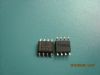
DescriptionThe transceivers in the HVD2x family offer performance far exceeding typical RS−485 devices. In addition to meeting all requirements of the TIA/EIA−485−A standard, the HVD2x family operates over an extended range of common-mode voltage, and has features such as high ESD protection, wide receiver hysteresis, and failsafe operation. This family of devices is ideally suited for long-cable networks, and other applications where the environment is too harsh for ordinary transceivers.
HVD2x family are designed for bidirectional data transmission on multipoint twisted-pair cables. Example applications are digital motor controllers, remote sensors and terminals, industrial process control, security stations, and environmental control systems.
HVD2x family combine a 3-state differential driver and a differential receiver, which operate from a single 5-V power supply. The driver differential outputs and the receiver differential inputs are connected internally to form a differential bus port that offers minimum loading to the bus.
HVD2x family features an extended common-mode voltage range making the device suitable for multipoint applications over long cable runs.
The 'HVD20 provides high signaling rate (up to 25 Mbps) for interconnecting networks of up to 64 nodes.
The 'HVD21 allows up to 256 connected nodes at moderate data rates (up to 5 Mbps). The driver output slew rate is controlled to provide reliable switching with shaped transitions which reduce high-frequency noise emissions.
The 'HVD22 has controlled driver output slew rate for low radiated noise in emission-sensitive applications and for improved signal quality with long stubs. Up to 256 'HVD22 nodes can be connected at signaling rates up to 500 kbps.
The 'HVD23 implements receiver equalization technology for improved jitter performance on differential bus applications with data rates up to 25 Mbps at cable lengths up to 160 meters.
The 'HVD24 implements receiver equalization technology for improved jitter performance on differential bus applications with data rates in the range of 1 Mbps to 10 Mbps at cable lengths up to 1000 meters.
The receivers HVD2x family also include a failsafe circuit that provides a high-level output within 250 microseconds after loss of the input signal. The most common causes of signal loss are disconnected cables, shorted lines, or the absence of any active transmitters on the bus. HVD2x family feature prevents noise from being received as valid data under these fault conditions. This feature may also be used for Wired-Or bus signaling.
The SN65HVD2X devices are characterized for operation over the temperature range of −40°C to 85°C.

 SN65HVD22 Data Sheet