ApplicationA differential line receiver commonly has a failsafe circuit to prevent it from switching on input noise. Current LVDS failsafe solutions require either external components with subsequent reductions in signal quality or integrated solutions with limited application. This family of rece...
SN65LVDS33: ApplicationA differential line receiver commonly has a failsafe circuit to prevent it from switching on input noise. Current LVDS failsafe solutions require either external components with subsequen...
SeekIC Buyer Protection PLUS - newly updated for 2013!
268 Transactions
All payment methods are secure and covered by SeekIC Buyer Protection PLUS.
A differential line receiver commonly has a failsafe circuit to prevent it from switching on input noise. Current LVDS failsafe solutions require either external components with subsequent reductions in signal quality or integrated solutions with limited application. This family of receivers has a new integrated failsafe that solves the limitations seen in present solutions. A detailed theory of operation is presented in application note The Active Failsafe Feature of the SN65LVDS32B, literature number SLLA082A.
The following figure shows one receiver channel with active failsafe. It consists of a main receiver that can respond to a high-speed input differential signal. Also connected to the input pair are two failsafe receivers that form a window comparator. The window comparator has a much slower response than the main receiver and it detects when the input differential falls below 80 mV. A 600-ns failsafe timer filters the window comparator outputs. When failsafe is asserted, the failsafe logic drives the main receiver output to logic high.

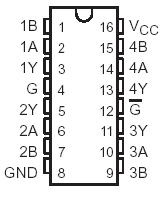
This family of four LVDS SN65LVDS33 data line receivers offers the widest common-mode input voltage range in the industry. These receivers provide an input voltage range specification compatible with a 5-V PECL signal as well as an overall increased ground-noise tolerance. SN65LVDS33 is in industry standard footprints with integrated termination as an option.
Precise control of the differential input voltage thresholds of SN65LVDS33 allows for inclusion of 50 mV of input voltage hysteresis to improve noise rejection on slowly changing input signals. The input thresholds of SN65LVDS33 are still no more than ±50 mV over the full input common-mode voltage range.
The high-speed switching of LVDS SN65LVDS33 signals usually necessitates the use of a line impedance matching resistor at the receiving-end of the cable or transmission media. The SN65LVDT series of receivers eliminates this external resistor by integrating it with the receiver. The nonterminated SN65LVDS series is also available for multidrop or other termination circuits.